 InkAIGet the app
A RECORDED DESIGN EXAMPLE
One request, then one refinement
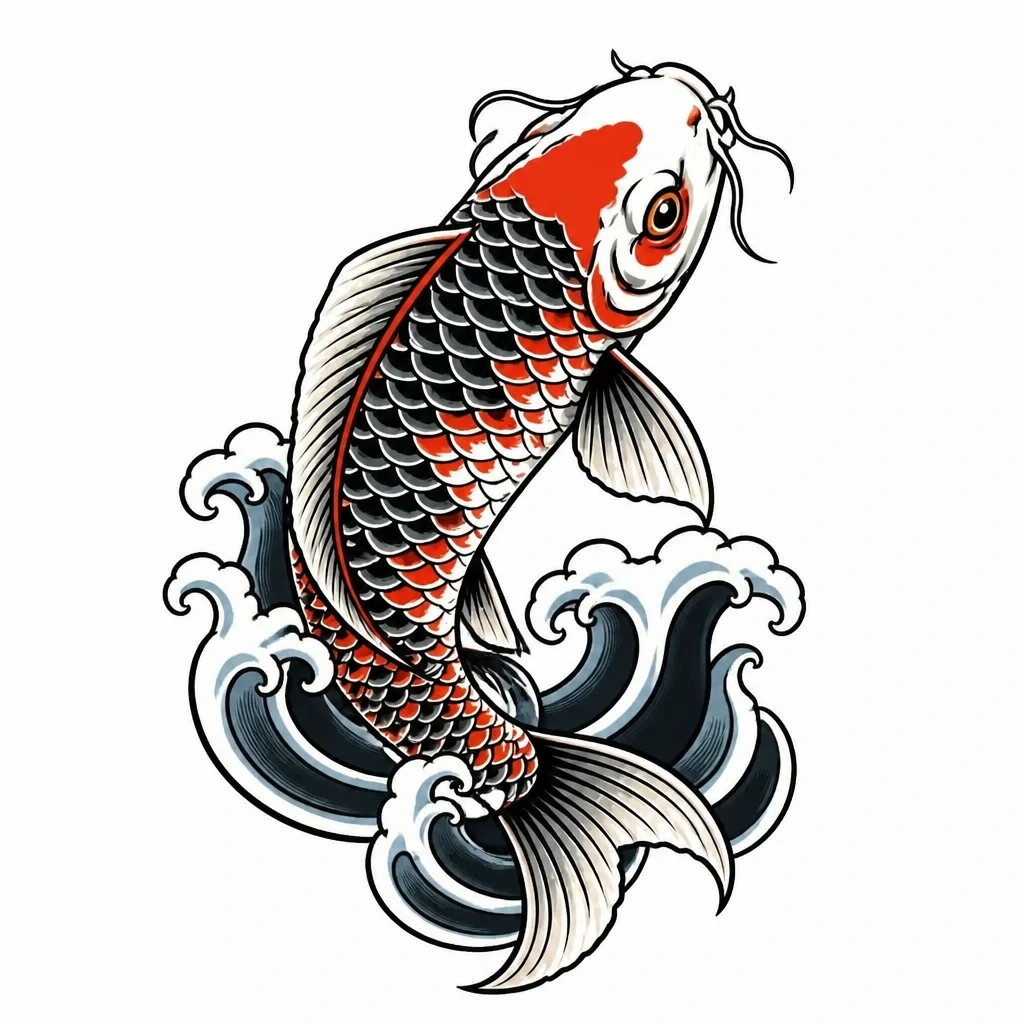
We selected the Japanese style and sent the brief below through the same generation service used by InkAI on October 25, 2026. We then used the first output as the input to a refinement. These are the recorded outputs.
What we asked for
Japanese-inspired tattoo flash concept of one koi curving through stylized waves, three maple leaves, bold black contours, limited vermilion accents, balanced composition, no text, isolated on a light background.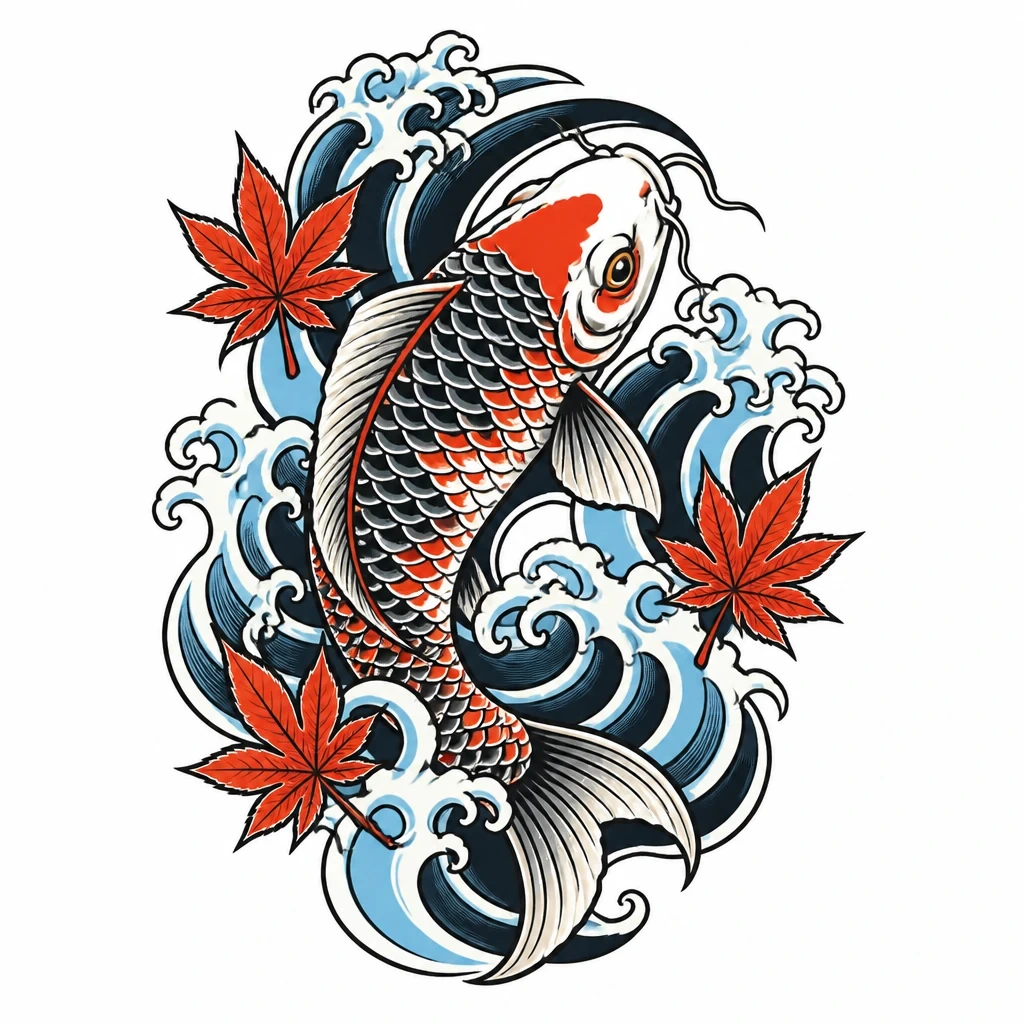
Our refinement instruction
Keep the same koi fish and its direction. Remove the maple leaves and reduce the number of wave shapes. Retain the black and red palette.What changed
The first result surrounds the koi with three maple leaves and a larger wave arrangement. The refined result removes the leaves and simplifies the waves. Blue-grey shading remains despite the request for black and red: refinement can preserve or introduce details you did not specify.
Created by LMakt using InkAI’s deployed image service, style prompts, and image-input workflow. These images are service outputs, not app screenshots. Actual app results vary. The app’s selected style image is also an input, so the text prompt alone does not specify every visual detail.
Think about the whole composition
For a Japanese-inspired concept, a useful starting brief includes a main subject, a direction of movement, and a limited set of supporting elements. A koi can create the main curve; waves can echo that movement; leaves can provide a small accent. If you want a piece grounded in a particular tradition, work with an artist who knows that tradition instead of treating an AI image as a historical reference.
Four directions to explore
Koi and waves
Ask for one koi moving through a few broad wave shapes. Compare an upward curve with a horizontal composition to see which direction fits your initial placement idea.
Maple leaves as an accent
Use a small number of leaves to punctuate a larger subject. Describe whether they should frame the main shape or follow its movement.
A peony with a bold outline
A large flower can be the main subject rather than a background detail. Request a strong outer shape and compare black-and-grey with a limited colour palette.
A dragon as a starting sketch
Begin with a single curved body and clear head shape. Ask an artist to review anatomy and composition before treating the generated concept as a usable tattoo design.
Make the next version your own
Keep the parts you like and compare one change at a time. These are useful next requests to explore after the recorded example.
- Remove the leaves to compare a simpler koi-and-wave composition.
- Change the direction of the koi while preserving the overall curve.
- Compare black-and-grey with a restrained black-and-red palette.
Bring references, not assumptions about meaning
Symbols can have different meanings across contexts and individual designs. Avoid assuming that a subject has one fixed meaning because an AI caption says so. If symbolism matters to you, explain the meaning you want to convey and ask your artist how to approach it. Bring reference images, your generated concept, and a description of the intended placement. A larger connected project also needs a composition planned around the body, which a square flash image cannot show.